
27 August 2026 · TJ Smile Studio
Broken veneer? 6 first hour steps and same day care in the UK
If your veneer breaks, follow six first hour actions, learn the signs that need emergency care, and explore same day digital repair options and UK cost...
A broken veneer is usually manageable if you act quickly. Keep the fragment safe, avoid chewing on that side, and get it checked promptly rather than reaching for superglue or leaving it. Most cases end in a straightforward rebond or repair, not a dental emergency, but the tooth underneath still needs a professional look before you decide anything.
TL;DR:
- Rebonding intact veneers within the first hour involves retrieving the fragment, keeping it moist, and avoiding household glues, with same-day repairs often possible.
- Dentists assess a broken veneer through visual inspection, decay checks, bite evaluation, and imaging to identify underlying issues that could affect repair success.
- Repair options include simple rebonding, composite bonding, porcelain remake, or crowns, with material choice impacting cost, durability, and repair difficulty.
- Most failures occur due to technical issues like contamination or poor preparation during initial placement, making accurate diagnosis crucial to prevent repeated breakage.
- Emergency care is necessary only if severe pain, large fractures exposing nerve tissue, or facial trauma are present; otherwise, chips and cracks can usually wait for routine appointments.
Table of Contents
- Broken veneer: what to do in the first hour
- How do dentists check a broken veneer?
- What are the repair and replacement options?
- Composite or porcelain: which repairs more easily?
- How can you stop it happening again?
- Is a broken veneer ever a dental emergency?
- How we handle veneer emergencies at TJ Smile Studio
- Getting your smile sorted at TJ Smile Studio
- Sources
- FAQ
Broken veneer: what to do in the first hour
The first thing to do with a broken or fully detached veneer is stop treating it like a lost cause. If the piece is intact, it can often be rebonded successfully, and how you handle those first sixty minutes affects whether that’s possible.
Here’s the order to work through:
- Retrieve and inspect the veneer. Check it’s whole rather than shattered, then place it in a small container lined with a moistened tissue. A dry environment can affect how well the internal surface bonds later, so keep it damp, not soaking.
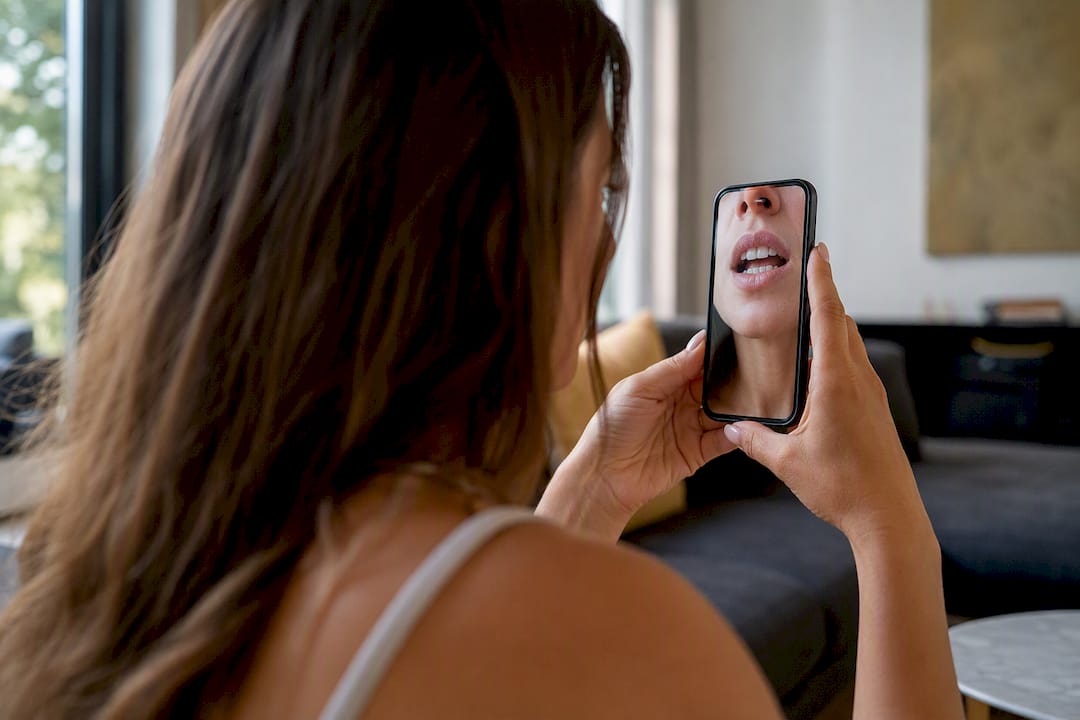
- Rinse your mouth gently with warm water. This clears debris without you having to poke at the exposed tooth with a finger or a cotton bud. Aggressive probing can dislodge more than you intend.
- Assess sensitivity. If the tooth stings with hot, cold, or air, that’s the underlying dentine reacting to exposure. It’s uncomfortable, not usually dangerous.
- Manage pain sensibly. A sensitive toothpaste dabbed on the area, paracetamol or ibuprofen at standard doses, and avoiding very hot or cold drinks will get you through until your appointment.
- Avoid chewing on that side. Soft foods only until a dentist has looked at it.
- Call your dental practice the same day. Tell them what happened, when, whether you still have the veneer, and whether you’re in pain. This helps them decide if you need to be seen today or within a day or two.
Resist the urge to reattach it yourself with any household adhesive. Superglue and similar products are not designed for oral tissue, can be toxic if swallowed, and will contaminate the fitting surface so a dentist can’t rebond it properly later.
Pro Tip: Photograph the gap in your mouth and the veneer itself before you leave the house. If your dentist offers a video triage call, this speeds up the decision on whether you need a same-day slot.
How do dentists check a broken veneer?
A dentist examines both the veneer and the tooth beneath it before recommending anything, because a veneer that looks fine can be sitting over a problem you can’t see.
The assessment typically covers:
- Visual inspection under magnification, checking the veneer’s margins for gaps, roughness, or discolouration that suggests bacterial leakage.
- Decay check at the margin. Because the seal between veneer and tooth is where decay most often starts, checking margins for decay is one of the first things a dentist does.
- Occlusion and bite evaluation. An uneven bite puts repeated pressure on one veneer, which is a common reason veneers chip in the first place. If your bite caused the failure, fixing that comes before any repair.
- Structural check of the tooth itself. Fractures, old fillings, or weakened enamel underneath change what’s realistically achievable.
- X-rays or an intraoral scan when indicated, particularly if there’s pain, deep decay is suspected, or the fracture looks close to the nerve.
Debonding often traces back to something technical rather than a flaw in the material. Contamination during the original placement, or enamel that wasn’t properly prepared, is a common cause of early failure, particularly within the first two years. That distinction matters for you: if the tooth and veneer are both sound, rebonding under strict isolation often works well the first time round.
What are the repair and replacement options?
Once your dentist knows what they’re dealing with, the treatment plan usually falls into one of four routes.
Rebonding the original veneer. If the veneer itself is undamaged and the tooth is healthy, this is the simplest fix. The dentist cleans both surfaces, checks for contamination, and recements it under isolation. It’s often done in a single visit and sits at the lower end of the cost scale, because no new veneer needs to be made.
Composite bonding or repair. For chips, small cracks, or where the original veneer can’t be reused, composite resin can rebuild the missing portion directly on the tooth. This is a conservative, faster option that’s typically finished in one appointment, though composite doesn’t always match porcelain’s shine perfectly and may need periodic polishing.
Porcelain remake. When a porcelain veneer has fractured completely, replacement is usually the only realistic route rather than a repair. This involves a lab-made restoration, temporaries while you wait, and multiple appointments spread over a few weeks.
Crowns or alternative restorations. If the underlying tooth structure is significantly compromised, a crown may offer better long-term support than another veneer.
- Rebonding: fastest, cheapest, only works if the veneer and tooth are both intact.
- Composite repair: quick, affordable, good for small damage, may need refreshing over time.
- Porcelain remake: strongest cosmetic match, most durable, but slower and more expensive.
- Crown: reserved for teeth with structural loss beyond what a veneer can support.
Clinical reviews suggest fractures and debonding are the two most frequent failure modes over a veneer’s 5 to 10 year lifespan, which is exactly why the assessment stage matters so much. Get the diagnosis wrong and you risk repeating the same failure within months.
Composite or porcelain: which repairs more easily?
Material matters more than most patients expect when it comes to repairability, cost, and how long a fix lasts.
- Composite veneers are usually quicker and cheaper to repair, often manageable in a single appointment, and generally sit in a lower cost bracket, commonly £250 to £600 per tooth in the UK. The trade off is that composite is softer and more prone to staining over time.
- Porcelain veneers are stronger and far more stain-resistant, but harder to repair once damaged and often need full replacement rather than a patch. Expect a higher price range, commonly £600 to £1,200 or more per tooth, reflecting the lab work involved.
Warranties or prior clinic guarantees can reduce what you pay out of pocket if the original work was recent, so it’s worth checking your paperwork before assuming you’re covering the full cost yourself. Timelines vary sharply too: a same-day rebond or composite repair can be finished in one visit, while a porcelain remake typically takes two to three weeks from impression to fitting, with a temporary veneer worn in between.
How can you stop it happening again?
Most repeat veneer failures share a cause the first repair didn’t address. Addressing the underlying reason, not just the crack, is what actually prevents recurrence.
- Get evaluated for bruxism. Night grinding is one of the biggest preventable risks to veneer longevity, and a custom-fitted nightguard is the single most effective preventive step if you grind or clench.
- Stop using your teeth as tools. Opening packets, biting nails, or crunching ice puts sudden lateral force exactly where veneers are weakest, at the edge.
- Cut back on very hard or sticky foods on veneered teeth specifically, not necessarily everywhere.
- Keep the margins clean. Plaque buildup right at the veneer’s edge is where decay and staining start, so focus your brushing and flossing there.
- Attend regular check-ups. A dentist can spot a failing margin or a shifting bite long before it causes a break.
- Consider an occlusal adjustment. If your bite is uneven, your dentist may need to adjust it, or plan any remake around it, to stop the new veneer failing the same way.
Pro Tip: If you’ve ground through a nightguard before, mention that at your consultation. It tells your dentist the grinding is forceful enough to need a more robust splint design, not just a thin one.
Is a broken veneer ever a dental emergency?
Most chips and cracks can wait for a routine appointment within a day or two. A few signs mean you shouldn’t wait that long:
- Severe or worsening pain, swelling, or fever, which point towards infection rather than simple sensitivity.
- A large fracture exposing deep tooth structure, especially if you notice a pink tinge or sharp, lingering pain that suggests the nerve is involved.
- Uncontrolled bleeding or any facial trauma connected to the break, such as from a fall or a blow.
If any of these apply, call your dental practice straight away, explain the symptoms clearly, and ask directly for a same-day emergency slot rather than the next routine opening.
How we handle veneer emergencies at TJ Smile Studio
I’m Dr Tashfeen Jamil, GDC 286427, and broken veneers are one of the most common calls our Glasgow clinic gets. We triage by phone first, isolate the tooth properly before touching anything, and use our digital workflow to scan, plan, and often treat in one visit rather than sending you away with a temporary. We’ll always give you an honest cost estimate before starting, and we’d rather tell you a rebond won’t hold than promise something that fails again in six months.
— Dr Tashfeen Jamil BDS, MFDS RCS Ed, AssocFCGDent - GDC 286427
Getting your smile sorted at TJ Smile Studio
TJ Smile Studio treats broken veneer cases the way they should be treated: assessed properly, fixed fast, and explained honestly, without the multi-week waits that some clinics build into their booking systems.

If your veneer is intact, we’ll usually attempt a rebond in the same visit using our digital scanning setup, so you’re not stuck with a gap while a lab makes a new one. If it’s beyond saving, we’ll talk you through composite bonding as a same-day interim fix or a full porcelain veneer replacement, with clear pricing and a realistic timeline before you commit to anything. Consultations cover the clinical check, an honest read on whether rebonding is viable, and, if you need a remake, options for spreading the cost. If you’re dealing with a broken veneer right now, book a consultation with us in Glasgow and we’ll get you seen quickly.
This article is general information, not a substitute for advice from a qualified doctor. Consult a qualified healthcare professional about your own circumstances before acting on anything here.
Sources
- What happens if a veneer falls off? | MD
- Veneers in the UK: Composite vs Porcelain, Cost and Risks | All Health and Care UK
- Veneer complications & failures: causes, fixes & solutions
- Fixing damaged porcelain veneers: cracks, chips & replacements explained
FAQ
Are teeth rotting under veneers?
Not typically, but decay can develop at the margin where the veneer meets the natural tooth if hygiene around that edge is neglected, which is exactly why dentists check margins closely during assessment.
Can you repair damaged veneer?
Yes, in many cases. Small chips and cracks are often fixed with composite bonding or a rebond of the original piece, while a fully fractured porcelain veneer usually needs replacement rather than repair.
My veneer fell off. What can I do to fix it temporarily?
Keep it safe in a moistened tissue, avoid chewing on that side, and never use household glue to reattach it yourself; contact your dentist promptly to arrange assessment.
How much does it cost to fix a broken veneer in the UK?
Composite repairs commonly range from £250 to £600 per tooth, while porcelain veneer replacements typically run from £600 to £1,200 or more per tooth, depending on the clinic and complexity.
How long does veneer repair take?
A rebond or composite repair is often completed in a single visit, while a porcelain remake usually takes two to three weeks from impressions to final fitting.
Recommended
This article is general information, not personal dental advice. What’s right for your teeth depends on a clinical examination — the condition of your enamel, gums, bite and any existing dental work — and no article can assess that. Outcomes vary between patients, and all treatment at TJ Smile Studio is subject to assessment and clinical suitability.
- Dr Tashfeen Jamil BDS, MFDS RCS Ed, AssocFCGDent, PGDip Restorative and Aesthetic Dentistry — GDC registration 286427
This article is general information, not personal dental advice. What's right for your teeth depends on a clinical examination — the condition of your enamel, gums, bite and any existing dental work — and no article can assess that. Outcomes vary between patients, and all treatment at TJ Smile Studio is subject to assessment and clinical suitability.
Clinically reviewed by Dr Tashfeen Jamil BDS, MFDS RCS Ed, AssocFCGDent, PGDip Restorative and Aesthetic Dentistry — GDC registration 286427, Principal Dentist at TJ Smile Studio, 1 Spiersbridge Way, Thornliebank, Glasgow G46 8NG.
If you have dental pain, swelling or an injury, call the practice on 07728 808510. Out of hours in Scotland, call NHS 24 on 111.