
28 August 2026 · TJ Smile Studio
Retainers After Invisalign: What UK Clinics Do Next to Protect Results
Practical UK clinic led advice on retainers after Invisalign: which types to choose, wear schedules (3–6 months then nightly), care, and fast fitting options.
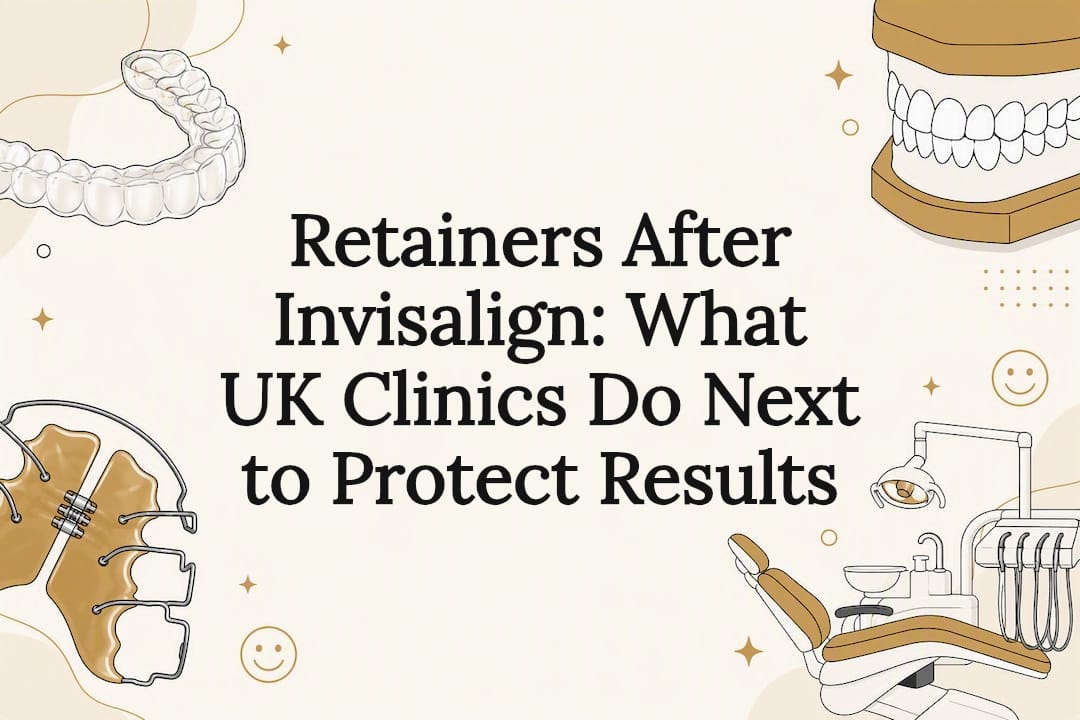
Yes, you need a retainer after Invisalign. Teeth are held in place by soft tissue and ligament fibres that take months to settle, so without retention they drift back towards their old positions. Start wearing whatever retainer your clinician has prescribed straight away, usually full-time at first, and if you haven’t yet had your fitting appointment, book it now. If a retainer feels wrong or has cracked, contact your dental practice before doing anything else.
TL;DR:
- Most patients should wear their retainers full-time for several months after Invisalign before tapering to nightly use, with long-term compliance being key to preventing relapse.
- Clear removable retainers need gentle cleaning with a soft toothbrush and regular soaking to prevent clouding and bacteria buildup, while bonded retainers require special flossing tools for proper hygiene.
- Removable retainers typically last for years if properly cared for, but bonded wires can last many years before needing repair, with replacements costing varying based on practice policies.
- Signs of retainer failure include looseness, visible gaps, cracks, or warping, prompting immediate contact with a dentist rather than attempting DIY fixes.
- Fusion of digital scans during Invisalign treatment allows clinics like TJ Smile Studio to fit and replace retainers more quickly than traditional methods, often within days.
Table of Contents
- Types of retainers after Invisalign: clear, Hawley or fixed
- Retainer wear after Invisalign: how long is long enough?
- How to care for your retainer: cleaning, storage and daily habits
- How long retainers last and what replacement typically costs
- What to do if your retainer breaks, loosens or won’t fit
- Clinic view: how TJ Smile Studio approaches post-Invisalign retention
- Managing your retainer while eating, travelling and playing sport
- Signs your retainer no longer fits and needs attention
- Making lifelong retention actually stick
- Book your retention review with TJ Smile Studio
- Sources
- FAQ
Types of retainers after Invisalign: clear, Hawley or fixed
Once your aligner treatment finishes, you’ll typically be offered one of three retainer types, or a combination of two.
Removable clear retainers (sometimes called vacuum-formed retainers or VFRs) are thin, transparent trays moulded to your teeth, similar in feel to the last aligner in your Invisalign series. They’re comfortable, barely visible, and easy to remove for eating. The trade-off is that they only work if you wear them as instructed, and they can warp if left somewhere hot.
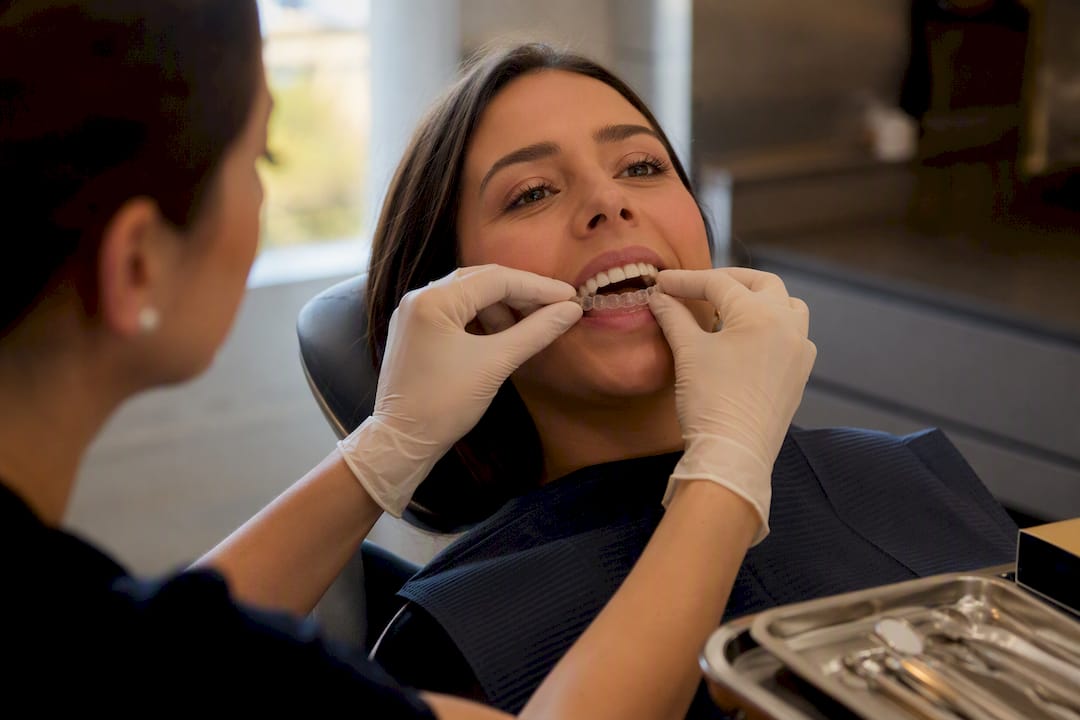
Hawley retainers use an acrylic palate plate with a metal wire across the front teeth. They’re sturdier and easier to adjust than clear trays, though far more visible, which is why most adult Invisalign patients are steered towards clear removable options instead.
Fixed (bonded) retainers are a thin wire glued to the back of the lower front teeth, occasionally the upper. They work around the clock without any effort from you, which matters because lower incisors are especially prone to drifting back out of alignment.
Many UK practitioners now recommend dual retention: a bonded wire on the lower front teeth paired with a removable clear retainer on the upper arch. This combination removes the compliance risk where it matters most while keeping the top retainer easy to clean and replace.
- Clear removable: discreet, flexible, relies on your compliance
- Hawley: durable, adjustable, more visible
- Fixed/bonded: continuous protection, but demands careful flossing and regular checks for debonding
Bonded wires trap plaque against the tooth surface, so hygiene has to step up a notch. Ask your practice for a spare removable retainer as backup even if you have a fixed one fitted, since a debonded wire needs immediate cover while it’s repaired.
Retainer wear after Invisalign: how long is long enough?
Most UK practices follow a similar rhythm: full-time wear for the initial months, tapering to nights only after that. Beyond the tapering period, many orthodontists and dentists now advise indefinite nightly wear, because the alternative is watching months of aligner work slowly unravel.
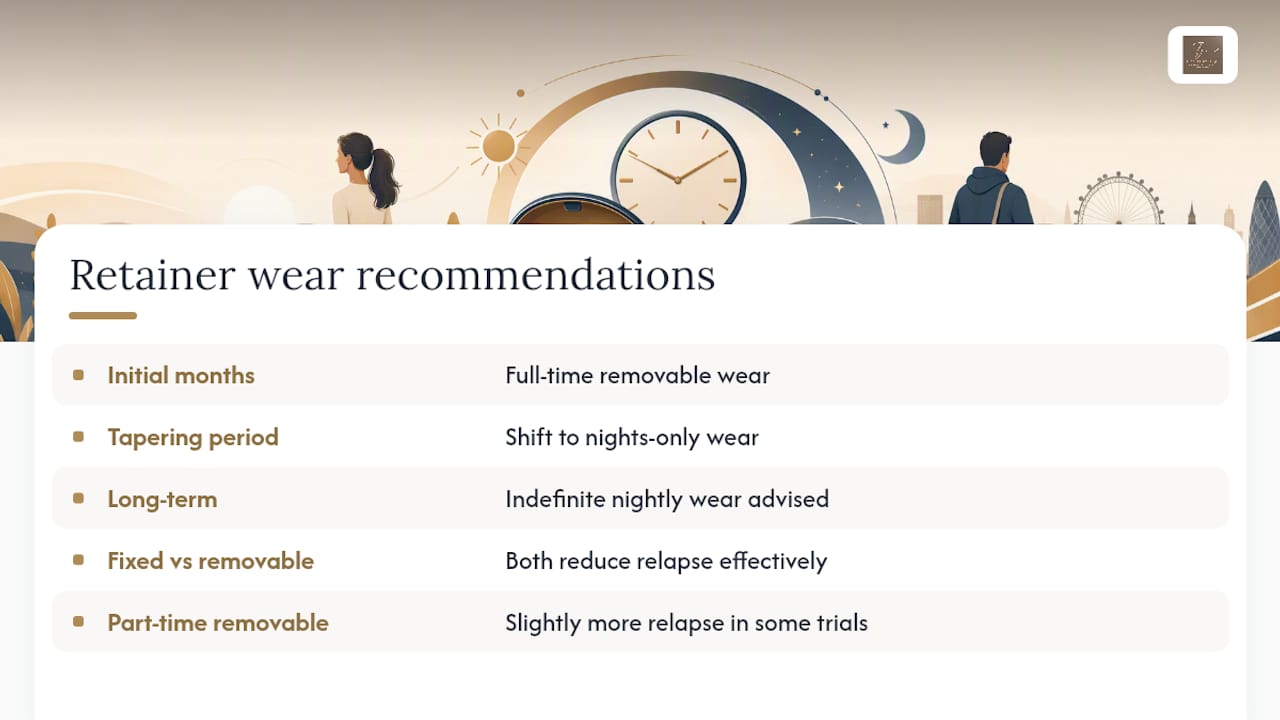
The evidence backs this up. A systematic review of retention procedures found that both fixed and removable retainers reduce relapse effectively, though removable retainers worn only part-time showed slightly more relapse in some trials than full-time wear or fixed retention. Full-time removable wear performed just as well as bonded wires. The takeaway is straightforward: consistency matters more than which retainer type you choose.
Guidance from the British Orthodontic Society supports long-term, often lifelong, nightly wear of removable retainers alongside structured review appointments to catch any drift or fit problems early, rather than leaving retention to chance once the initial months are over.
How quickly you get your retainer after finishing Invisalign varies by clinic, but same-day or next-day fitting is common where digital scanning workflows are used, since no physical mould needs to be sent away. Your personal regimen also depends on age, whether you grind your teeth at night, and how severe your original misalignment was; a mild case treated in a few months of aligners still needs the same discipline as a more complex one, because relapse doesn’t discriminate by how far your teeth had to travel.
How to care for your retainer: cleaning, storage and daily habits
Retainers pick up plaque and bacteria just like teeth do, and a neglected one can smell, discolour, or harbour the kind of buildup that irritates gums.
- Rinse your retainer under cool or lukewarm water every time you take it out. Hot water warps clear plastic trays permanently.
- Brush it gently with a soft toothbrush, ideally using a dedicated cleaner rather than standard toothpaste, which is too abrasive for clear plastic and dulls its clarity over time.
- Soak it once or twice a week in a retainer or denture cleaning tablet to lift bacteria a brush alone won’t reach.
- Store it in its case whenever it’s out of your mouth. Wrapping it in tissue or leaving it loose on a worktop is the single most common reason retainers get thrown away or crushed by accident.
Bonded retainers need a different approach. A standard toothbrush won’t reach underneath the wire, so an interdental brush or floss threader is essential every day. Book a hygienist visit every six months if you have a fixed retainer, since plaque builds up around the bond sites faster than most patients expect.
Pro Tip: Keep a spare retainer case in your bag or car. Most retainers that get lost or binned are the ones wrapped in a napkin at a restaurant table.
How long retainers last and what replacement typically costs
Removable clear retainers generally last multiple years with consistent care before the plastic clouds, thins, or loses its snug fit. Hawley retainers, being more robust, can last several years but occasionally need wire adjustments. Bonded retainers can stay in place for many years, though the wire itself can fatigue and debond at one or more points, particularly around the canines where flexing is greatest.
- Common failure modes: cracking or clouding (clear retainers), wire distortion (Hawley), partial debonding (fixed)
- Ask your practice whether spare removable retainers are included, since many clinics supply a backup pair specifically to avoid gaps in wear while a replacement is made
- Confirm what’s covered under any ongoing plan versus what’s charged separately for a remake
If your Invisalign treatment was NHS-funded, be aware that NHS-funded orthodontic care typically includes a supervised retention period of around 12 months after active treatment ends. After that window, replacement retainers and long-term monitoring usually move to private care. It’s worth asking your provider directly what their review schedule and replacement charges look like before you need one.
What to do if your retainer breaks, loosens or won’t fit
Don’t try to force a retainer that no longer seats properly. Orthodontic guidance is clear that pushing a tight or warped retainer onto your teeth can do more harm than leaving it out and calling your dentist.
- Bonded retainer feels loose or has partially debonded: stop chewing on that side, avoid sticky or hard foods, and book an urgent appointment. A partially detached wire can apply uneven pressure and shift teeth in unpredictable directions if left.
- Removable retainer has cracked: stop wearing it and contact your practice for a remake rather than continuing with a compromised fit.
- Retainer suddenly won’t seat: this usually signals some movement has already happened. Wear a backup if you have one and get seen within days, not weeks.
Never attempt a DIY repair with superglue or wire cutters. It’s a false economy that often makes the eventual professional fix harder.
Clinic view: how TJ Smile Studio approaches post-Invisalign retention
Retention advice is only as good as the person giving it. Dr Tashfeen Jamil, BDS, MFDS RCS Ed, AssocFCGDent, holds GDC registration number 286427, which patients can verify directly with the regulator.
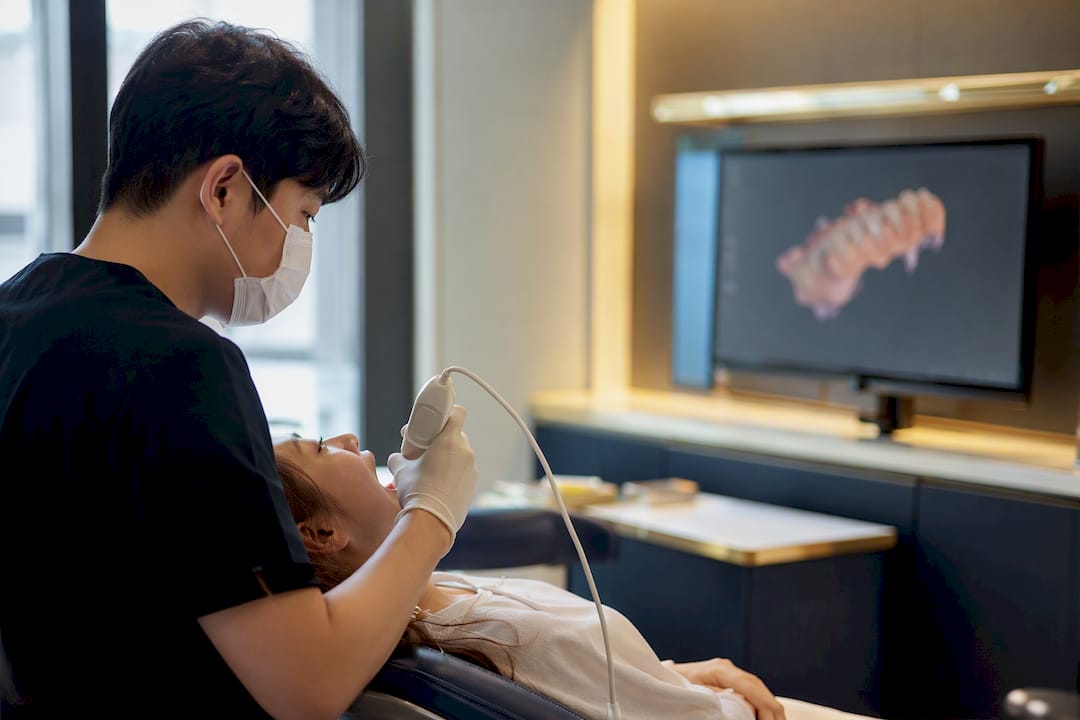
At TJ Smile Studio, retention planning uses the same digital scans taken during Invisalign treatment, so removable retainers can often be designed and fitted quickly rather than waiting weeks for a physical mould. Depending on your case, that might mean a bonded lower retainer, a removable upper, or both. At your fitting, ask specifically for a spare tray, confirm what a replacement costs, and get an annual review booked in your calendar rather than left to memory.
Managing your retainer while eating, travelling and playing sport
Removable retainers come out for meals, full stop. Eating with one in risks cracking the plastic and trapping food against your teeth, neither of which does you any favours. The routine that works best is simple: retainer out, into its case, straight into a pocket or bag before you sit down to eat, then a quick brush before it goes back in.
Bonded retainers stay in permanently, so there’s no removal ritual to think about, but sticky or hard foods (chewy sweets, ice, hard crusts) put extra strain on the bond sites and are worth avoiding regardless of retainer type.
Sport raises a different question. If you wear a mouthguard for contact sport, a removable retainer generally has to come out first, since most mouthguards aren’t designed to fit over one. Bring your retainer case to training and matches rather than leaving it loose in a bag, where it’s easily crushed or forgotten. For non-contact sport and everyday exercise, retainers (removable or fixed) don’t usually cause problems, though heavy grinding under exertion is worth mentioning to your dentist if you notice it.
Travelling is where retainers most often go missing, usually left in a hotel bathroom wrapped in tissue. Pack the case in your hand luggage, not checked baggage, and consider photographing your retainer case before a trip so it’s easy to describe if a hotel housekeeping team needs to search for it. If you’re travelling for more than a few weeks, ask your practice about getting a spare pair made in advance.
Signs your retainer no longer fits and needs attention
A retainer that used to slip on easily and suddenly feels tight is the clearest warning sign there is. That resistance means your teeth have already started to shift, even by a fraction of a millimetre, and the retainer is doing exactly what it’s supposed to by resisting the movement.
Other signals worth acting on:
- Visible gaps between the retainer and one or more teeth when it’s seated, particularly around the front teeth where relapse tends to show first
- New pressure or soreness after inserting a retainer that previously felt comfortable
- A rocking or unstable feel, as though the retainer isn’t sitting flush against the full arch
- Cracks, cloudiness or a rough edge on a clear retainer, which reduce how well it grips even before a gap is visible
- A bonded wire that flexes or clicks when you run your tongue over it, suggesting one or more bond points have failed
None of these mean panic, but they do mean a phone call rather than waiting for your next scheduled check. Relapse in the first few months after Invisalign happens faster than most patients expect, and catching it early is far easier to correct than waiting until the shift is obvious to the eye.
Making lifelong retention actually stick
Retention only works if it becomes as automatic as brushing your teeth. Put your retainer case next to your toothbrush, not in a drawer, and nightly wear stops feeling like a chore. Talk to your dentist about a fixed annual check rather than waiting for a problem to force the appointment.
— Dr Tashfeen Jamil BDS, MFDS RCS Ed, AssocFCGDent - GDC 286427
Book your retention review with TJ Smile Studio
TJ Smile Studio gives Glasgow patients a faster route to a well-fitted retainer than the usual wait for a physical impression to be sent away and returned weeks later. Because retention is planned from the same digital scans used during your Invisalign treatment in Glasgow, replacement clear retainers and bonded wire repairs can often be turned around far quicker than traditional lab-based methods allow.
Whether you need your first retainer fitted, a spare tray made, or an urgent repair after a bonded wire came loose, the practice can assess your case and talk you through costs before any work begins. Check current treatment pricing or browse the full range of treatments available if you’re also considering further cosmetic work alongside your retention plan. Get in touch to book a retention review and keep the results of your Invisalign treatment exactly where they should be.
This article is general information, not a substitute for advice from a qualified doctor. Consult a qualified healthcare professional about your own circumstances before acting on anything here.
Sources
- Retention procedures for stabilising tooth position after orthodontic treatment (systematic review, PMC)
- Clinical guidelines: orthodontic retention (British Orthodontic Society)
- Orthodontic retainers: Q&A (NHS England)
FAQ
How long are you supposed to wear retainers after Invisalign?
Most patients wear retainers full-time for three to six months, then switch to nights only, often continuing indefinitely on a nightly basis to guard against long-term relapse.
Do you need retainers permanently after Invisalign?
Effectively yes. Teeth can drift at any age, so most dentists recommend some form of night-time retainer wear for as long as you want to keep your teeth straight.
How long does it take to get your retainer after Invisalign?
This varies by clinic, but practices using digital scanning, including TJ Smile Studio, can often fit or fabricate a removable retainer within days rather than the weeks a traditional mould-based process takes.
How many retainers do you get after Invisalign?
There’s no universal number. Many practices provide one primary removable retainer plus a spare, and patients with bonded retainers typically get a removable backup as well in case the fixed wire needs repair.
Recommended
This article is general information, not personal dental advice. What’s right for your teeth depends on a clinical examination — the condition of your enamel, gums, bite and any existing dental work — and no article can assess that. Outcomes vary between patients, and all treatment at TJ Smile Studio is subject to assessment and clinical suitability.
- Dr Tashfeen Jamil BDS, MFDS RCS Ed, AssocFCGDent, PGDip Restorative and Aesthetic Dentistry — GDC registration 286427
This article is general information, not personal dental advice. What's right for your teeth depends on a clinical examination — the condition of your enamel, gums, bite and any existing dental work — and no article can assess that. Outcomes vary between patients, and all treatment at TJ Smile Studio is subject to assessment and clinical suitability.
Clinically reviewed by Dr Tashfeen Jamil BDS, MFDS RCS Ed, AssocFCGDent, PGDip Restorative and Aesthetic Dentistry — GDC registration 286427, Principal Dentist at TJ Smile Studio, 1 Spiersbridge Way, Thornliebank, Glasgow G46 8NG.
If you have dental pain, swelling or an injury, call the practice on 07728 808510. Out of hours in Scotland, call NHS 24 on 111.